

Case Study: Dan Popper Didn’t “Monetize His Audience.” He Earned It.
A case study in how community, consistency, and patience turned a Chargers beat into a sustainable Substack business.

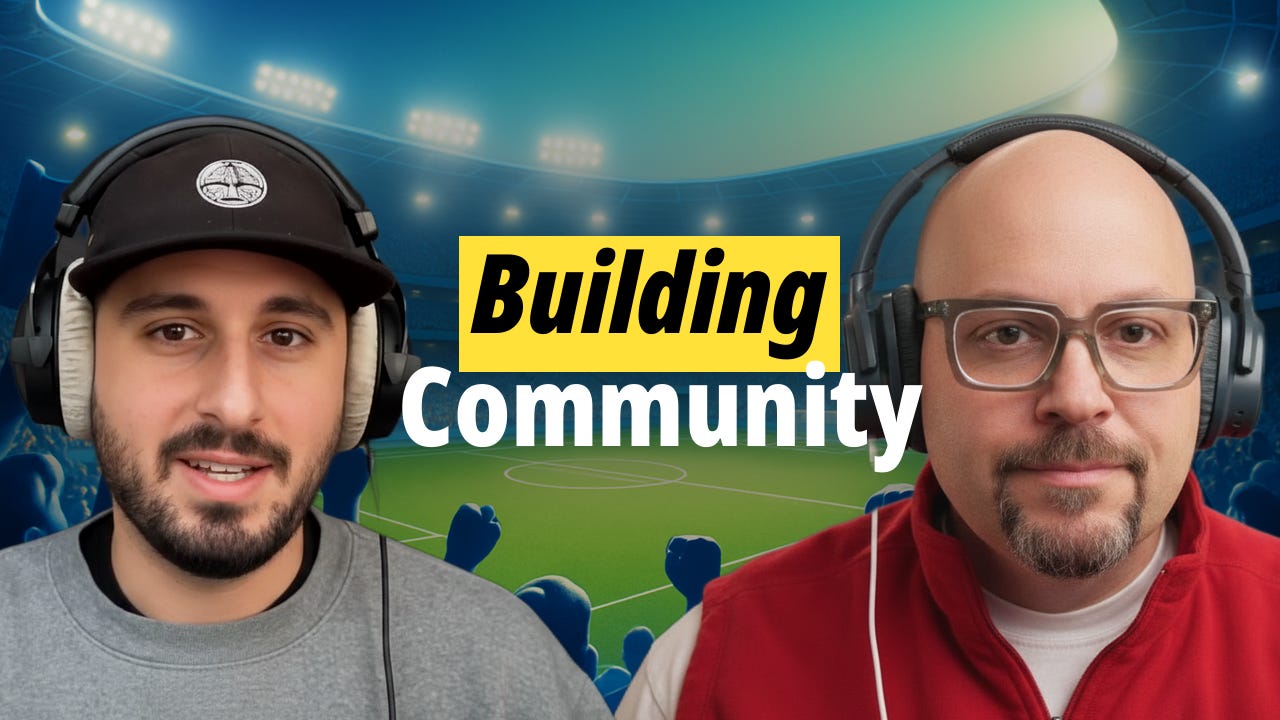
There’s a version of sports journalism that still thinks the job ends when the story is filed.
Dan Popper doesn’t work that way.
Dan is the Chargers beat writer for The Athletic. He’s been on the beat for seven seasons, covered three head coaches, two general managers, and just about every version of Chargers fandom you can imagine.
A former colleague, Dan joined me for an episode of the Write Sports podcast earlier this month.
But what makes him one of the most interesting sports creators on Substack right now isn’t just his reporting.
It’s how intentionally he built a two-way relationship with his audience — and then monetized it without breaking trust with his Hops with Pop on Substack.
As of the date we recorded the podcast, Dan had more than 660 paid subscribers on Substack. Now that the Chargers are set for the playoffs, that number could still swell.
Note: Dan charges $8 per month and $80 per year for his paid access.
660 x $80 = $52,800
That’s right, if all his paid subscribers got the discounted annual subscription, Dan’s bringing in an extra $52,800 per year.
Not from hype.
Not from shortcuts.
From reps.
Here’s what he’s doing — and what other sports creators should pay attention to.
1. He Treated the Beat Like a Community, Not a Megaphone
From the beginning of his career, Dan’s philosophy was simple:
“I wanted it to be a two-way street.”
Mailbags. Replies. Explainers. Threads.
Not just what he thought fans should care about — but what fans were already talking about.
This matters more than creators realize.
Legacy beat writing often treated fan ideas as something to ignore or dismiss. Dan did the opposite. If fans were obsessed with a trade idea, he didn’t roll his eyes — he explained why it could or couldn’t happen.
That framing turns speculation into value.
Lesson for creators:
Your audience’s questions are not a distraction.
They’re your content roadmap.
2. He stopped focusing on the community on Twitter (X) — but kept the community engaged
Twitter used to be where Dan did most of his engagement.
Over time, the platform changed. Bigger audience, more noise, more toxicity.
Instead of fighting that environment, he made a strategic move:
He kept his presence there (because of its large audience, it’s still a solid place for discovery), but brought the conversation somewhere else. First, he tried YouTube, then he found his home on Substack.
Substack wasn’t just a publishing platform for him. Dan doesn’t post written content there. For him, Substack became:
A home for live streams
A home for his podcast
A place for long threads
A space where Chargers fans could talk to each other, not just to him
The key difference?
He didn’t abandon engagement — he relocated it.
Lesson for creators:
Platforms change. Relationships don’t.
If you’ve built trust, your audience will follow you — but only if you give them somewhere better to land.
3. He Didn’t Monetize Too Early (This Is the Big One)
This is one of the biggest questions and hardest to answer of all from my clients and followers: When do I turn on paid subscriptions?
Dan ran his Substack for nine months before turning on paid subscriptions.
Nine months of:
Free live streams and podcasts
A consistent content cadence
Proving what the product actually was
His goal wasn’t growth for growth’s sake.
It was expectation.
“People had to expect it to be there every week.”
Only when fans were used to the content, and felt worse without it, did he introduce the paywall.
That’s why it worked.
People weren’t paying for a gamble.
They were paying to keep something they already relied on.
Lesson for creators:
Monetization isn’t about confidence.
It’s about proof of concept.
4. He Made Fans Smarter — and That’s the Product
One of Dan’s most underrated insights is this:
Fans don’t just want opinions.
They want to be better fans.
Dan’s niche is film study, X’s and O’s, cap realities, and advanced stats — explained clearly, consistently, and without condescension.
Subscribers aren’t just consuming content.
They’re upgrading their fandom.
“I’m a more educated fan because I have this.”
That’s why $8/months ($80 per year) feels reasonable.
It’s replacing confusion with clarity.
Lesson for creators:
If your content makes your audience feel smarter, more confident, or more informed — you’re building something people will pay for.
5. He Understood There Are No Shortcuts
Dan was blunt about this, and it’s worth repeating:
“There is no shortcut.”
Seven years on the Chargers beat.
Years of YouTube live streams before Substack.
A decade-plus of learning how to do the job.
The Substack didn’t explode overnight.
It stacked days.
That’s the part people skip when they look at subscriber numbers.
Lesson for creators:
If you’re early, you’re not behind.
You’re just early.
6. He Differentiated; Then Went All In
Dan asked the most important creator question early:
Why should someone come to me instead of everyone else?
His answer:
Deep football knowledge
Film breakdown
Advanced stats + reporting
Chargers-specific authority
He didn’t try to be everything.
He tried to be essential to a specific audience.
And then he doubled down.
Lesson for creators:
Different doesn’t mean louder.
It means clearer.
Final Takeaway
Dan Popper didn’t build a Substack audience by chasing trends.
He did it by:
Listening before speaking
Showing up before charging
Educating instead of hot-taking
Treating his audience like collaborators, not clicks
This is what sustainable sports creation looks like.
And if you’re trying to build something of your own — whether you’re covering a pro team, a college program, or a niche sport — Dan’s playbook is worth studying closely.
No gimmicks.
Just reps, trust, and community.
Find Dan’s Substack here:

Find his work at The Athletic here: https://www.nytimes.com/athletic/author/daniel-popper/